
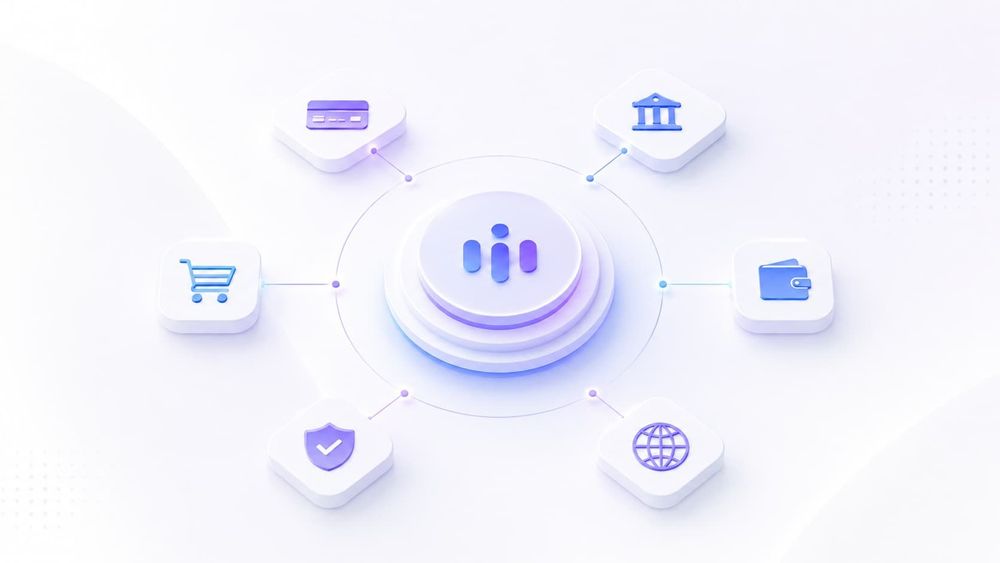
Enterprise payments are no longer a simple connection between a checkout page and a payment provider.
A large merchant may process transactions across several regions, currencies, brands, customer segments, and payment methods. Cards, digital wallets, local payment methods, bank transfers, subscriptions, refunds, chargebacks, fraud checks, 3DS flows, tokenization, settlement reporting, and reconciliation all become part of the same operational picture.
At first, many merchants manage this with a few direct provider integrations. That can work while the business is smaller or focused on one market. But as payment volume grows, the limitations become harder to ignore. One provider may perform well in one region but poorly in another. A new local payment method may take months to launch. A provider outage can interrupt revenue. Approval rates may drop without a clear explanation. Finance teams may need to reconcile data from several dashboards, while payment teams struggle to understand which provider is helping or hurting performance.
Payment orchestration is designed to bring more structure to that environment.
A payment orchestration platform sits between the merchant's checkout and the wider payment ecosystem. It gives the business a central layer for connecting providers, routing transactions, managing payment methods, retrying failed payments, monitoring provider performance, and keeping payment data more consistent across systems.
For enterprise merchants, the value is not just technical. Orchestration helps payment teams reduce dependency on a single provider, improve resilience, expand into new markets faster, and make better decisions about how transactions should be processed.
In this guide, we'll look at some of the payment orchestration platforms enterprise merchants should watch in 2026, where each platform fits best, and how to think about choosing the right one.
What payment orchestration means for enterprise merchants
Payment orchestration is often described as a central control layer for payments. Instead of integrating each PSP, acquirer, gateway, wallet, fraud tool, and local payment method separately, merchants can manage them through one platform.
For an enterprise merchant, this means the payment stack becomes more flexible. A transaction does not have to depend on one provider by default. It can be routed based on market, currency, card type, amount, risk level, provider performance, cost, or other business rules. If one provider fails or performs poorly, the transaction can be retried or sent through another route. If the business expands into a new country, local payment methods can be added without rebuilding the entire payment setup.
This becomes especially important when payment operations affect more than checkout conversion. At enterprise scale, payments touch product, finance, risk, compliance, customer support, data analytics, and leadership. A small change in approval rates can have a direct revenue impact. Poor reporting can slow reconciliation. Limited token portability can make it harder to change providers. Slow integrations can delay market expansion.
A good orchestration layer helps merchants move from a fragmented payment setup to a more manageable operating model. The goal is not simply to have more integrations. The goal is to give the business more routes, better visibility, and more control over the full payment lifecycle.
How we selected the platforms
There is no single best payment orchestration platform for every enterprise merchant. A global retailer, travel company, marketplace, subscription business, gaming platform, telecom company, or digital services business may all need different capabilities.
For this comparison, we focused on platforms that are relevant for larger merchants and complex payment operations. The main criteria were provider and payment method connectivity, routing and cascading capabilities, support for enterprise payment operations, tokenization, reporting, fraud and risk tools, workflow flexibility, market expansion support, and overall fit for high-volume businesses.
Quick comparison: top payment orchestration platforms in 2026
| Platform | Best for |
|---|---|
| Spreedly | Merchants that want gateway independence, tokenization, and provider portability |
| Akurateco | Enterprise merchants that want more control over payment infrastructure, routing, reporting, fraud tools, and branded payment operations |
| Primer | Payment and commerce teams that want no-code payment workflows |
| Gr4vy | Merchants looking for cloud-native payment orchestration and modular provider management |
| Yuno | Global merchants expanding across regions and payment methods |
| CellPoint Digital | Airlines, travel companies, and merchants with travel-specific payment complexity |
| BR-DGE | Merchants that need modular payment connectivity and routing |
| Paydock | Organizations looking for low-code orchestration across payments, fraud, and identity |
| IXOPAY | Enterprise merchants that need orchestration, tokenization, and payment intelligence |
| APEXX | Enterprise merchants looking for global acquiring and payment method access |
1. Spreedly
Spreedly is one of the most established names in payment orchestration, and it is especially relevant for merchants that care about gateway independence and token portability.
Many enterprise merchants want to avoid being locked into one processor or gateway. If payment credentials and checkout logic are tied too closely to a single provider, switching providers or testing new acquiring relationships can become difficult. This can limit negotiation power, slow down expansion, and make the business more dependent on one vendor's performance.
Spreedly helps solve this by creating a more flexible layer between the merchant's systems and the payment ecosystem. A merchant can connect to multiple payment services, route transactions across providers, and keep payment data more portable.
This makes Spreedly a good fit for merchants that already have provider complexity or expect to add more payment partners over time. It is particularly strong when tokenization and payment data portability are central to the strategy.
The main thing to keep in mind is that Spreedly is more focused on connectivity, tokenization, and portability than on broader branded payment infrastructure. Merchants that need deeper operational tools, billing, fraud configuration, branded payment pages, or a wider gateway infrastructure layer may want to compare it with platforms such as Akurateco.
2. Akurateco
Akurateco is best suited for enterprise merchants that want to modernize their payment infrastructure and keep more control over payment operations.
The platform combines payment orchestration with gateway infrastructure, routing, cascading, fraud prevention, tokenization, billing, reporting, analytics, transaction monitoring, merchant management, and branded payment infrastructure. That broader scope makes it relevant for merchants that need more than a basic provider connection.
For a large merchant, payment orchestration is often only one part of the problem. The business may also need to manage several providers, improve approval rates, monitor transaction performance, add local payment methods, configure fraud tools, standardize reporting, and give internal teams better visibility over payment operations. Akurateco is designed for that kind of environment, where payments need to be managed as an infrastructure layer rather than a single checkout feature.
This is where Akurateco's white-label and infrastructure angle becomes useful. Some enterprise merchants, marketplaces, telecom companies, and digital platforms want more control over how payment services are presented and managed. They may not want to build the full payment stack internally, but they also do not want to rely completely on disconnected third-party systems. Akurateco gives those businesses a way to operate a more controlled payment environment while still using ready-made infrastructure.
For merchants that only need one provider and a simple checkout, Akurateco may be more than necessary. But for enterprise businesses managing multiple markets, PSPs, acquirers, payment methods, and operational teams, it is a strong platform to include in the evaluation.
3. Primer
Primer is a strong option for payment and commerce teams that want more control over payment workflows without relying on engineering for every change.
Its platform focuses on no-code payment workflows, allowing teams to build logic visually, apply conditions, test services, adjust routing, and change payment flows faster. For enterprise merchants, this can be valuable because payment logic often changes more frequently than technical release cycles allow.
A payment team may need to test a new provider, adjust 3DS logic, add a fraud service, respond to a provider outage, or create different payment flows for different markets. If every change becomes a development project, optimization slows down. Primer gives business and operations teams more room to manage payment workflows directly.
Primer is especially useful for merchants that run frequent experiments or operate in fast-moving commerce environments. It is less about owning the full payment infrastructure and more about making payment logic easier to configure and improve.
For merchants focused on checkout optimization and workflow agility, Primer is a strong candidate. For businesses that need a deeper infrastructure layer or branded payment operations, it may need to be compared with more infrastructure-focused platforms.
4. Gr4vy
Gr4vy is built around cloud-native payment orchestration and modular provider management.
For enterprise merchants, the value is in keeping payment infrastructure flexible. Instead of embedding too much payment logic directly into the commerce platform, merchants can use Gr4vy as a separate orchestration layer for providers, payment methods, and routing decisions.
This can make the payment stack easier to change over time. A merchant can add providers, support new payment methods, or adjust routing without turning every update into a major rebuild. That matters for businesses that operate across several markets or expect their payment setup to keep evolving.
Gr4vy is a good fit for merchants that think about payments as infrastructure and want a modular way to manage provider relationships. It is likely to be most useful for businesses with enough transaction volume and payment complexity to justify a dedicated orchestration layer.
5. Yuno
Yuno is relevant for global merchants that need to expand across regions and payment methods.
Payment behavior changes significantly from one market to another. Customers may prefer different wallets, bank transfer methods, local card schemes, or alternative payment options. Providers also perform differently depending on country, currency, issuing bank, and transaction type.
Yuno helps merchants manage that variation by centralizing payment providers, acquirers, fraud tools, and payment methods through one orchestration layer. This can be useful for businesses that want to enter new markets faster without rebuilding the payment stack each time.
For enterprise merchants with international growth plans, Yuno's main appeal is regional flexibility. The platform can help payment teams adapt to local payment preferences and provider performance differences while keeping operations more centralized.
As with any orchestration platform, merchants should look closely at provider coverage, payment method availability, and routing options in their target markets.
6. CellPoint Digital
CellPoint Digital is one of the more specialized platforms in this list, with a strong focus on travel and digital commerce.
Travel payments are often more complex than standard ecommerce payments. Airlines and travel companies deal with cross-border transactions, multiple currencies, refunds, cancellations, itinerary changes, ancillary sales, fraud risk, and industry-specific booking systems. These requirements can create payment flows that general-purpose platforms do not always address in enough detail.
CellPoint Digital is designed around these travel-specific needs. For airlines, travel companies, and merchants with similar complexity, that specialization can be a major advantage.
For merchants outside the travel sector, some of CellPoint Digital's strongest features may be less relevant. Retailers, SaaS companies, gaming platforms, and marketplaces may want to compare it with broader orchestration platforms that are less tied to a specific vertical.
7. BR-DGE
BR-DGE is a payment orchestration platform focused on modular connectivity, routing, reporting, network tokenization, and access to a broad payment ecosystem.
For enterprise merchants, BR-DGE can be useful when the goal is to improve the existing payment stack without replacing everything at once. A merchant may already work with several providers, wallets, fraud tools, or regional payment services. Instead of rebuilding from scratch, BR-DGE can help connect those components through a more flexible orchestration layer.
This makes it a good fit for merchants that want to modernize payment operations step by step. The platform's modular approach can help businesses add new services, improve routing, and gain more control over payment connectivity while keeping parts of their current setup.
Merchants should evaluate BR-DGE based on regional coverage, available connections, and how well its ecosystem matches their current and future markets.
8. Paydock
Paydock takes a low-code, API-first approach to orchestration across payments, fraud, and identity.
This broader scope can be useful for merchants where payment operations are closely connected to risk, compliance, verification, and back-office workflows. Instead of managing payment services, fraud checks, and identity tools separately, Paydock gives businesses a way to coordinate more of that stack through one layer.
For enterprise merchants, this can reduce operational complexity and make it easier to connect different services without building each integration independently.
Paydock may be especially relevant for organizations that want orchestration to cover more than transaction routing. However, if the main priority is advanced payment routing, cascading, and provider performance optimization, merchants should compare it with platforms that specialize more deeply in those areas.
9. IXOPAY
IXOPAY is an enterprise-grade payment orchestration platform focused on provider flexibility, tokenization, and payment intelligence.
For merchants that have outgrown a single-provider setup, IXOPAY can help centralize payment operations across acquirers, geographies, card schemes, and payment methods. It is particularly relevant when token ownership and payment data control are important parts of the strategy.
This matters because orchestration is not only about deciding where a transaction should go. It is also about understanding what happens across providers, keeping payment data portable, and using performance insights to make better decisions over time.
IXOPAY is a strong fit for merchants that need orchestration, tokenization, and analytics to work together. It is most relevant for businesses with enterprise-level payment complexity rather than merchants with a simple provider setup.
10. APEXX
APEXX Global provides payment orchestration for enterprise merchants that want access to global acquiring, gateways, and alternative payment methods through one layer.
For large merchants operating across regions, APEXX can help centralize payment connectivity and route transactions to different acquirers or providers. This can make it easier to manage provider relationships, improve coverage, and support different payment methods in different markets.
APEXX is especially relevant for merchants looking for a broad acquiring and payment method network. As with other enterprise-focused platforms, businesses should evaluate whether its coverage, commercial model, and optimization features match their scale and target regions.
How to choose the right payment orchestration platform
Choosing a payment orchestration platform is not just a technical decision. For enterprise merchants, it can affect approval rates, payment costs, market expansion, provider dependency, fraud operations, reporting, reconciliation, and customer experience.
The first question is whether the business is solving a checkout problem or a broader infrastructure problem.
Some merchants mainly need better checkout performance. They want more payment methods, smarter routing, retries, and clearer reporting. In that case, platforms such as Primer, Spreedly, Yuno, Gr4vy, BR-DGE, IXOPAY, Paydock, or APEXX may all be relevant depending on the merchant's specific needs.
Other merchants need to take more ownership of the payment layer itself. They may want to manage several providers, configure fraud tools, standardize reporting, use branded payment pages, support internal payment teams, and reduce dependency on individual PSPs. This is where Akurateco becomes especially interesting, because it combines orchestration with gateway infrastructure and white-label payment operations.
Provider dependency is another important factor. Single-provider setups are simple, but they create risk. If one PSP has downtime, weak approval rates in a region, limited local payment method coverage, or unfavorable commercial terms, the merchant has fewer options. Orchestration helps reduce that dependency by giving transactions more possible routes.
Approval rates also deserve close attention. For high-volume merchants, even a small improvement can have a meaningful revenue impact. A strong orchestration platform should help payment teams understand provider performance and route transactions more intelligently. The goal is not just to process payments, but to send each transaction through the route most likely to succeed.
Market expansion is another key consideration. Payment performance is local. A provider that works well in one country may not be the best option in another. Customer preferences, fraud patterns, local payment methods, issuing bank behavior, and acceptance rates vary by region. Before choosing a platform, merchants should check whether its provider coverage and payment method support match their real growth plans.
Internal ownership also matters. In some businesses, developers manage most payment changes. In others, payment operations teams need to adjust routing, rules, and workflows directly. No-code platforms may help operations teams move faster, while infrastructure-focused platforms may give technical teams more control. The right choice depends on how the merchant wants to run payments day to day.
Token portability should not be overlooked either. If customer payment credentials are tied too closely to one provider, switching or adding providers can become harder. For enterprise merchants with a long-term payment strategy, tokenization and data portability can be just as important as routing.
Finally, merchants should think about resilience. Provider outages and performance issues happen. The important question is whether the business can respond quickly. A good orchestration setup should support failover, retries, cascading, and provider monitoring. For enterprise merchants, that is not just a technical safety net. It can protect revenue during real payment disruptions.
Final thoughts
Payment orchestration has become important because enterprise payment stacks are no longer simple.
Large merchants need to manage multiple providers, acquirers, payment methods, markets, fraud tools, reporting systems, and operational workflows. If all of that is handled through disconnected integrations and dashboards, payments become harder to optimize and harder to control.
The right orchestration platform gives merchants more flexibility. Spreedly is strong for gateway independence and token portability. Primer is useful for no-code payment workflows. Gr4vy offers a cloud-native orchestration model. Yuno is relevant for global payment expansion. CellPoint Digital stands out for travel payments. BR-DGE is strong in modular connectivity. Paydock brings payments, fraud, and identity together. IXOPAY is strong in enterprise orchestration and payment intelligence. APEXX is a good fit for merchants looking for global acquiring and payment method access.
Akurateco deserves attention when the merchant wants something broader than provider connectivity. It brings orchestration together with gateway infrastructure, routing, fraud tools, reporting, tokenization, billing, transaction monitoring, and branded payment operations. That makes it especially relevant for enterprise merchants that want to reduce provider dependency and take more control over how payments are managed.
In 2026, the best payment orchestration platform is not simply the one with the longest integration list. It is the one that fits the merchant's markets, payment volume, operational model, technical setup, and long-term strategy.
For enterprise merchants, orchestration is no longer just a way to simplify integrations. It is a way to build a more resilient, flexible, and controllable payment operation.